
 Biomass
  Warehouse
  Msme services
  Agro-Base Business
  Business Registration
  Electric Vehicle (EV)
  Physical Book
  Tender Updates


Agri Warehousing Investment and Government Incentives
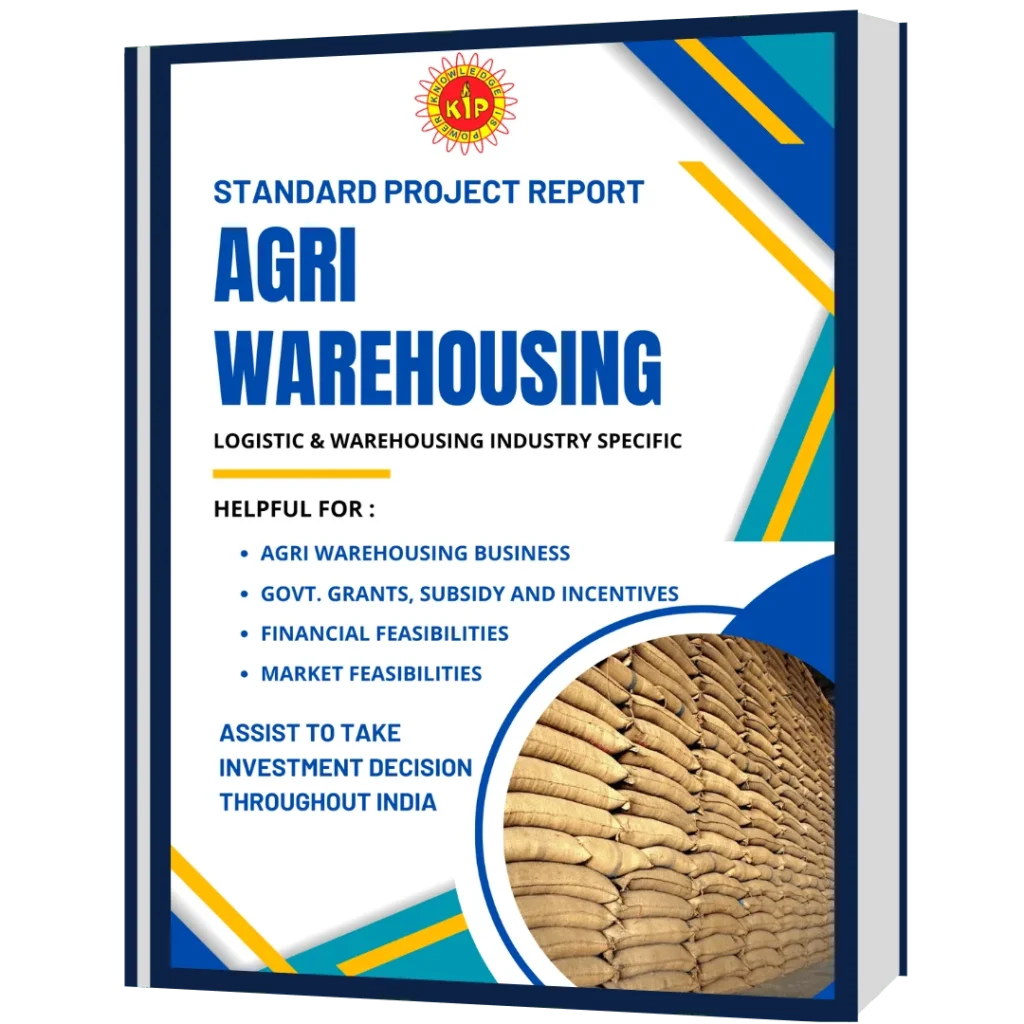
Investing in India’s agri warehousing sector offers high potential due to growing demand for organized storage, minimizing post-harvest losses, and strong government backing. Agri warehouses—either conventional (for grains like wheat, paddy, Ragi) or temperature-controlled (for perishable goods)—play a vital role in stabilizing supply chains.
Introduction: The Rise of Agri Warehousing in India
Agri warehousing plays a pivotal role in India’s agricultural supply chain. These facilities are designed for the storage, handling, and management of agricultural products, ensuring that crops, grains, and raw materials are preserved, organized, and efficiently distributed to markets, processors, and consumers. Acting as a crucial buffer between harvest and market demand, agri warehouses help stabilize supply, maintain quality, and enhance food security.
India’s growing agricultural output and increasing demand for efficient storage make investment in agri warehousing highly lucrative, especially under supportive government schemes.
Who Benefits from Agri Warehousing?
- Farmers: Store crops post-harvest to manage surplus and sell at optimal prices.
Wholesalers & Traders: Store bulk produce for later distribution and price optimization.
Food Processing Units & Agro Industries: Dal mills, rice mills, and other businesses can build storage under favorable policies.
Government Agencies: FCI, CWC, and state departments use warehouses for reserves and price stabilization.
Logistics Companies & Investors: Secure rental income and expand supply chain operations.
Market Potential and Sector Drivers
Demand Drivers: Growth in food processing, export opportunities, and government procurement initiatives.
Technological Advancements: IoT, AI, and automation enable smart warehouses with automated climate control.
Sectoral Needs: Rising demand for temperature-controlled storage for fruits, dairy, and meat, and scientific storage like silos for grains.
Government Support: Policies like Agriculture Infrastructure Fund (AIF), National Logistics Policy (NLP), and PM Gati Shakti offer capital subsidies, concessional loans, and tax benefits.
Maximizing Government Incentives and Subsidies for Agri Warehousing
Investors in agri warehousing are encouraged to utilize both state and central government incentives, categorized as follows:
- Front-end Incentives: These include Stamp Duty refunds on land purchases, exemptions from Land Development Charges, and Conversion Charges.
- Back-end Incentives: Cover Capital Subsidy on fixed investments (land, building, machinery), Electricity Duty exemptions, Interest Subsidy on Bank Term Loans, and Property Tax refunds.
Key Central Schemes:
- Agriculture Infrastructure Fund (AIF): Offers 3% interest subvention per annum on loans up to ₹2 crore for up to 7 years, applicable to up to 25 projects.
- NABARD Subsidy: Supports storage infrastructure up to 5,000 MT capacity. Standard beneficiaries get 25% subsidy on capital cost (ceiling ₹1,500/MT), while FPOs and women entrepreneurs receive 33.33%.
- Tax Benefits (Section 35AD): 100% deduction on capital expenditure for new agri-warehousing facilities in the first year.
- Credit Guarantee (CGTMSE): Coverage for loans up to ₹2 crore, with fees paid by the government.
General Compliance and Eligibility Criteria
Minimum Eligible Fixed Capital Investment (EFCI): ₹2 Crore
Business Entity: Must be a registered entity such as Private Limited, Partnership, or Proprietorship
Regulatory Registration: Mandatory registration with the Warehousing Development and Regulatory Authority (WDRA)
Documentation: Submission of a detailed Business Plan and Financial Viability Report
Legal Approvals: Obtain necessary NOCs, Change in Land Use (CLU) approvals, Fire Safety clearance, and local authority permissions
Operational Compliance: Adhere to FSSAI regulations, food storage guidelines, and fumigation norms for safe handling of agricultural produce
How KIP Can Help You
KIP provides expert consultancy for maximizing government subsidies on Agri Warehousing projects:
Subsidy Viability Report (SVR): Lists all applicable state and central incentives.
Business Modeling & Registration: Guides the right structure (MSME, Pvt. Ltd., FPO) to optimize subsidies.
Detailed Project Report (DPR): Covers technical, financial, and operational feasibility.
Bank Financing Assistance: Supports loan processing and interest subvention linkage.
Subsidy Application & Processing: End-to-end support for AIF, NABARD, and CGTMSE applications.
Compliance & Claim Support: Timely guidance to claim recurring incentives.
Frequently Asked Questions (FAQs)
Q1:What is an Agri Warehouse and its main types?
Agri warehouses store, handle, and manage agricultural products, stabilizing supply and inventory. Types:
Temperature-controlled: For perishables.
Conventional: For crops like wheat, paddy, Ragi.
Q2: Who uses Agri Warehouses?
Farmers, wholesalers, traders, food processing units, agro-industries, logistics firms, builders, and government bodies (FCI, CWC) benefit from storage facilities.
Q3: What incentives does the AIF scheme provide?
3% interest subvention on loans up to ₹2 crore for 7 years
Eligible for up to 25 projects
Credit guarantee coverage under CGTMSE
Q4: How does NABARD support warehouse construction?
Subsidy up to 5,000 MT capacity
33.33% for FPOs, Panchayats, women, SC/ST entrepreneurs
25% for others
Maximum subsidy: ₹75–100 lakh per district
Q5: What are the regulatory requirements?
CLU approval, local NOCs, Fire Safety NOC
WDRA registration
Road usage NOCs (NHAI/PWC/Local Authority)
Compliance with FSSAI, fumigation, and food storage norms







 Home
Home  Whishlist
  Checkout
  Account