
 Biomass
  Warehouse
  Msme services
  Agro-Base Business
  Business Registration
  Electric Vehicle (EV)
  Physical Book
  Tender Updates


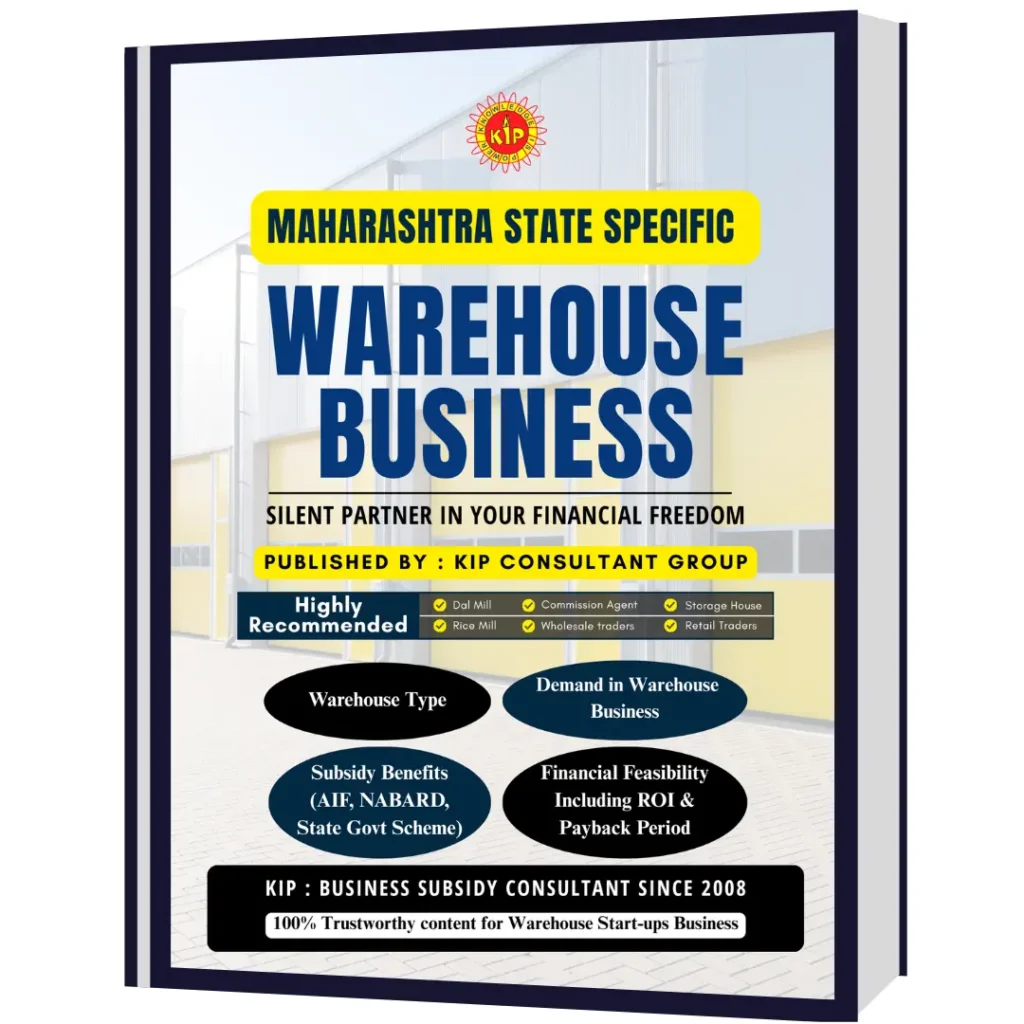
Start a Warehouse Business in Maharashtra with Government Subsidy
The Maharashtra Warehouse Business is emerging as one of the most profitable opportunities in India’s logistics and infrastructure sector. With rapid growth in agriculture, e-commerce, and industrial supply chains, warehouses in Maharashtra are now evolving into advanced, technology-driven logistics hubs rather than simple storage units.
This guide provides a high-level SEO-friendly overview of the warehouse business model, government subsidies, profitability, risks, and how investors can get started.
What is Agri & Commercial Warehouse Business?
The modern warehouse business in Maharashtra includes two major categories:
Agri Warehouses
These warehouses are designed for storing agricultural produce like wheat, cotton, soybeans, pulses, and sugar. They focus on:
- Moisture control
- Pest protection
- Scientific storage systems
- e-NWR (electronic warehouse receipt) financing
Commercial Warehouses
These are large-scale logistics facilities used by:
- E-commerce companies
- Retail chains
- Manufacturing industries
They focus on:
- Fast loading/unloading (high throughput)
- Automation systems
- Dock management
- Supply chain efficiency
Why Warehouse Business in Maharashtra?
Maharashtra is one of India’s strongest industrial and logistics hubs, making it ideal for warehouse investment.
Key Reasons:
- Strategic location with strong connectivity (roads, rail, ports)
- Presence of JNPT port supporting import-export trade
- Rapid growth in e-commerce and organized retail
- High agricultural production (soybean, cotton, sugarcane)
- Industrial corridors like DMIC and Samruddhi Mahamarg boosting demand
Government Subsidies for Warehouse Business
Government support plays a major role in reducing investment cost.
Central Government Schemes:
Agriculture Infrastructure Fund (AIF)
- Interest subvention up to 3%
- Loan support up to ₹2 crore
- Repayment tenure up to 7 years
NABARD AMI Scheme
- Capital subsidy: 25% to 33.33%
Maharashtra State Schemes:
- 2%–3% interest subsidy
- 50%–75% stamp duty exemption
- Incentives for AI and automation adoption
Industrial Policy 2025
- EPF reimbursement
- Electricity duty exemption
- Rental and lease subsidies
Risk Factors & Management
Like any infrastructure business, warehousing also has risks:
Key Risks:
- Land-use conversion (CLU) delays
- Fire safety compliance issues
- Theft and operational losses
- Regulatory approvals
Risk Mitigation:
- Proper legal documentation
- Insurance coverage
- Automated security systems
- Compliance with government standards
Why You Should Invest in This Sector
Warehouse investment in Maharashtra aligns with India’s long-term infrastructure growth. With rising demand from logistics, agriculture, and industrial sectors, warehouses are becoming high-value income-generating assets.
It also connects with major development projects like:
- Samruddhi Mahamarg Corridor
- Delhi-Mumbai Industrial Corridor (DMIC)
How KIP Can Help You
The KIP provides end-to-end support for warehouse setup:
- Subsidy Viability Report (SVR)
- Detailed Project Report (DPR)
- Bank loan assistance & financing support
- Subsidy application filing (AIF, NABARD, State schemes)
- Weekly updates on tenders and policies
Frequently Asked Questions (FAQs)
Q1: Is warehouse business profitable in Maharashtra?
Yes, warehouse business is highly profitable due to strong demand from agriculture, e-commerce, and manufacturing sectors, with ROI reaching up to 24%–53%.
Q2: What subsidies are available for warehouse projects?
Investors can benefit from AIF (interest subsidy up to 3%), NABARD subsidy (25%–33.33%), and Maharashtra state incentives like stamp duty exemption and interest subsidies.
Q3: What is the minimum investment required?
Investment depends on land size and capacity, but mid-scale warehouse projects typically start from ₹1.5 crore to ₹5 crore.
Q4: What is the difference between agri and commercial warehouses?
Agri warehouses store crops with moisture and pest control, while commercial warehouses focus on logistics, automation, and supply chain distribution.
Q5: How long does it take to recover investment?
On average, investors recover their capital in around 6 to 7 years depending on occupancy rate, location, and operational efficiency.
Tags
#AgriWarehouse
#AIFScheme
#BusinessGrowthIndia
#BusinessIdeasIndia
#BusinessOpportunity
#CommercialWarehouse
#DMICCorridor
#EntrepreneurIndia
#GodownBusiness
#HighProfitBusiness
#IndustrialBusiness
#InfrastructureIndia
#LogisticsBusiness
#LogisticsIndia
#MaharashtraBusiness
#MakeInIndia
#MSMEIndia
#NABARD
#PassiveIncomeIndia
#RealEstateInvestment
#ROIInvestment
#SamruddhiMahamarg
#SmallBusinessIdeas
#StartupIndia
#SubsidySchemeIndia
#SupplyChainIndia
#WarehouseBusiness
#WarehouseInvestment
#WarehouseProfit
#WarehouseSetup
Posted in
#Warehouse







 Home
Home  Whishlist
  Checkout
  Account