
 Biomass
  Warehouse
  Msme services
  Agro-Base Business
  Business Registration
  Electric Vehicle (EV)
  Physical Book
  Tender Updates


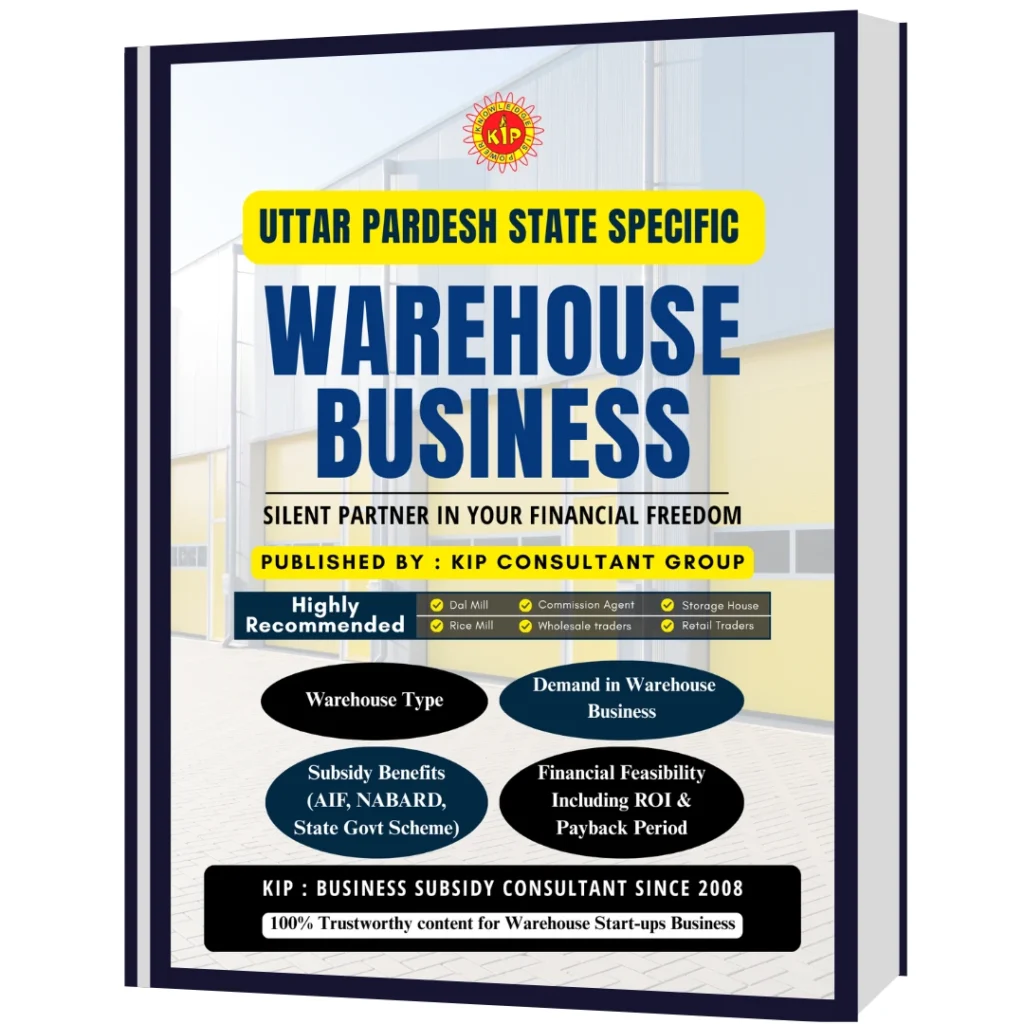
Build a Successful Warehouse Business in Uttar Pradesh
The warehouse business in India is rapidly transforming from traditional storage godowns into a modern, technology-driven logistics industry. With the rise of e-commerce, industrial expansion, food processing, and infrastructure development, warehousing has become one of the fastest-growing sectors in the country.
Among all Indian states, Uttar Pradesh is emerging as a major logistics and warehousing hub due to its strategic location, expanding expressway network, industrial corridors, and strong agricultural production base.
Whether you are an entrepreneur, investor, agro-business owner, transporter, or industrial developer, the Agri & Commercial Warehouse Business offers long-term growth, stable income, and attractive government subsidies.
What is an Agri & Commercial Warehouse?
Agricultural Warehouse
Agricultural warehouses are storage facilities designed for:
- Food grains
- Pulses
- Seeds
- Fertilizers
- Fruits & vegetables
- Cold storage commodities
These warehouses support farmers, FPOs, government procurement agencies, and agri-traders by reducing post-harvest losses and maintaining product quality.
Commercial Warehouse
Commercial warehouses are developed for industries such as:
- FMCG
- E-commerce
- Retail distribution
- Manufacturing
- Automobile parts
- Pharmaceuticals
- Logistics companies
These facilities are generally leased to companies for inventory storage and supply chain management.
Why Warehouse Business is Growing in Uttar Pradesh
1. Strategic Location Advantage
Uttar Pradesh connects North India with East and Central India, making it one of the best logistics destinations in the country.
The state has excellent connectivity through:
- Yamuna Expressway
- Purvanchal Expressway
- Ganga Expressway
- Dedicated Freight Corridor (DFC)
- National highways and industrial corridors
This strong infrastructure reduces transportation costs and improves delivery efficiency.
2. Rising Demand from E-Commerce & Industries
Rapid growth in:
- Online shopping
- Manufacturing units
- Food processing industries
- Retail chains
- Third-party logistics (3PL)
3. Stable Rental Income & Long-Term Returns
Warehouse businesses typically operate on long-term lease agreements ranging from 5–15 years, providing:
- Consistent rental income
- Low vacancy risk
- Capital appreciation
- Strong ROI potential
This makes warehousing a highly attractive investment segment.
Government Subsidies for Warehouse Projects
Central Government Subsidies
Agriculture Infrastructure Fund (AIF)
The Government of India offers major support under the Agriculture Infrastructure Fund Scheme:
Benefits include:
- 3% interest subvention
- Loan support up to ₹2 crore
- Credit guarantee assistance
- Lower financing burden
NABARD Warehouse Subsidy
NABARD supports agricultural infrastructure projects through:
- Capital subsidy assistance
- Rural godown schemes
- Agricultural marketing infrastructure support
This significantly improves project viability for agri-warehouse developers.
Uttar Pradesh Warehousing & Logistics Policy 2022
The Uttar Pradesh government offers multiple incentives for warehouse investors.
Key Benefits Include:
Capital Subsidy
- 15% capital subsidy
- Maximum benefit up to ₹10 crore in selected zones
Stamp Duty Exemption
- Significant relief on land registration costs
Land Use Conversion Benefits
- Up to 75% waiver on conversion charges
MSME Benefits
Under UP MSME Policy 2022:
- Capital subsidy
- Interest subsidy
- Additional incentives for small and medium enterprises
Financial Feasibility of Warehouse Projects
Estimated Investment
For a 20,000 MT warehouse project:
- Approximate construction cost: ₹8 crore
- Additional land & infrastructure costs may apply
Expected Returns
- Stable rental yield
- Long-term lease security
- Approximate payback period: 6–7 years
With government subsidies and proper financial planning, project profitability improves substantially.
How KIP Can Help You
The KIP provides end-to-end support for warehouse setup:
- Subsidy Viability Report (SVR)
- Detailed Project Report (DPR)
- Bank loan assistance & financing support
- Subsidy application filing (AIF, NABARD, State schemes)
- Weekly updates on tenders and policies
Frequently Asked Questions (FAQs)
Q1: What is the difference between agri and commercial warehouses?
Agri warehouses store farm products, while commercial warehouses serve industries like e-commerce, FMCG, and manufacturing.
Q2: What subsidies are available for warehouse projects in UP?
Projects can get benefits under AIF, NABARD, UP Warehousing Policy 2022, and MSME subsidy schemes.
Q3: How much investment is needed to start a warehouse business?
A medium-scale warehouse project may require around ₹8 crore, excluding land cost.
Q4: Is warehouse business profitable in India?
Yes, it offers stable rental income, long-term growth, and high demand from logistics and e-commerce sectors.
Q5: How can KIP Team help?
KIP helps with DPR preparation, subsidy processing, bank loans, WDRA registration, and project consultancy.
Tags
#agri warehouse
#agricultural warehouse
#commercial warehouse
#industrial warehouse
#logistics business
#StartupIndia
#subsidy consultancy
#SubsidySchemeIndia
#SupplyChainIndia
#UP warehouse policy
#Warehouse business
#warehouse consultancy
#warehouse DPR
#warehouse funding
#warehouse investment
#warehouse loan
#warehouse project
#warehouse subsidy
#WarehouseBusiness
#WarehouseInvestment
#WarehouseProfit
#WarehouseSetup
Posted in
#Warehouse







 Home
Home  Whishlist
  Checkout
  Account