 Biomass
  Warehouse
  Msme services
  Agro-Base Business
  Business Registration
  Electric Vehicle (EV)
  Physical Book
  Tender Updates

Why the Pellet and Briquette Business is India's Next 100% Tax-Free Opportunity
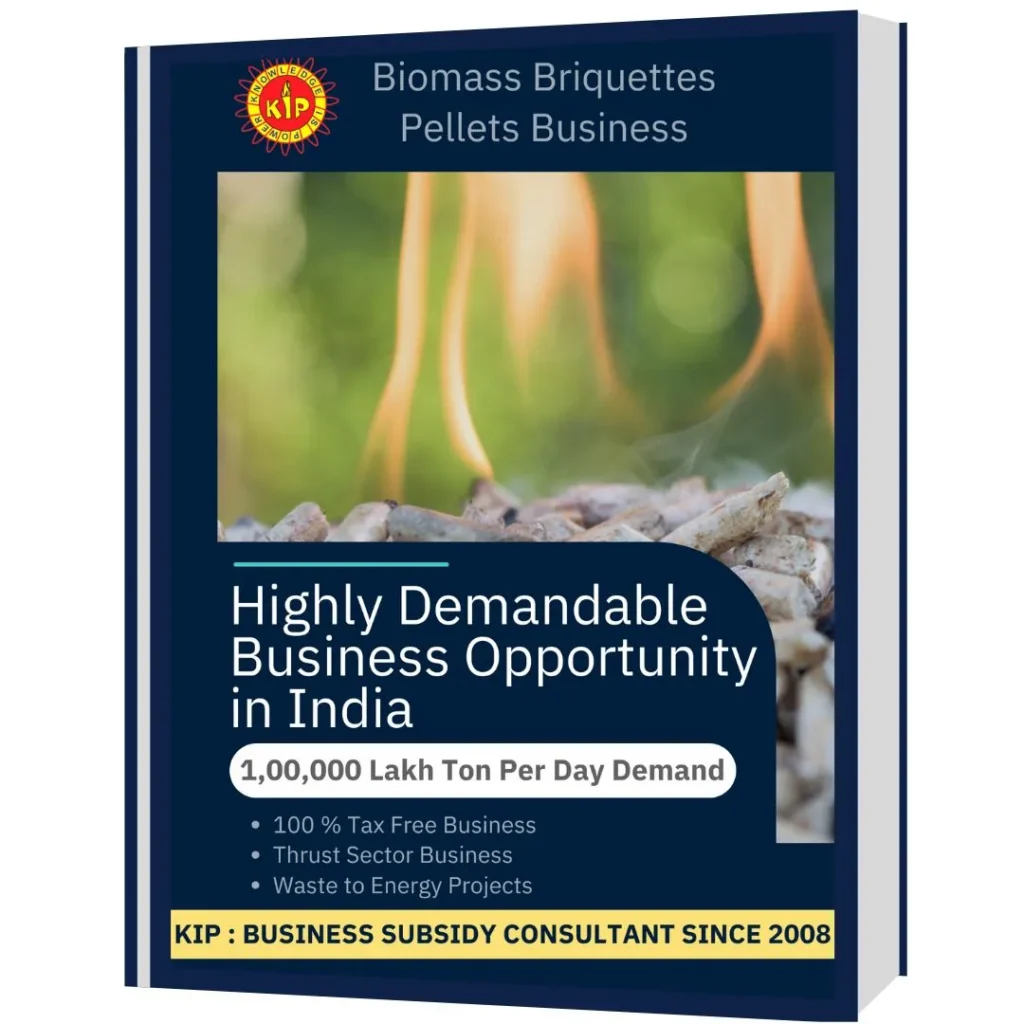
The Biomass Briquettes and Pellets business is one of India’s fastest-growing and 100% tax-free industries, recognized as a thrust sector by the Government of India. It is a classic waste-to-energy opportunity — turning agricultural residue into eco-friendly fuel — while contributing to both energy security and environmental sustainability.
The rising focus on replacing coal with green energy, combined with government mandates and financial incentives, makes this one of the most profitable renewable ventures in India today.
High Demand and Market Opportunity
Huge Demand, Limited Supply: India’s estimated daily demand for biomass fuel is around 95,000 tons, while production stands at only 8,000–10,000 tons/day.
Government Mandate: All coal-based thermal power plants are required to co-fire a minimum of 5% biomass pellets or briquettes with coal (as per the MoEFCC notification, July 2023).
Widespread Usage: Biomass fuels are being adopted by paper mills, textile units, food processors, and brick kilns for their cost-efficiency and cleaner emissions.
Eco-Friendly Growth: Biomass products are a low-pollution, renewable substitute for coal, helping industries meet sustainability goals.
Biomass vs. Coal: Cost, Pollution & Performance
| Factor | Biomass Briquettes/Pellets | Coal |
|---|---|---|
| Cost | Cheaper | Expensive |
| Pollution | Low | High |
| Ash Content | 6–10% | 15–30% |
| Calorific Value | 3400–4000 KCAL/kg | 5000–6000 KCAL/kg |
| Handling | Easy storage & transport | Requires special facilities |
Major Subsidies & Tax Benefits
1. 100% Income Tax Exemption
Businesses manufacturing briquettes or pellets from agricultural or biodegradable waste get:
→ 100% tax deduction on profits for the first five consecutive years.
2. Central Financial Assistance (CFA) – MNRE
| Product Type | Subsidy per MTPH | Max Project Benefit |
|---|---|---|
| Briquettes | ₹9 lakh/MTPH | ₹45 lakh |
| Non-Torrefied Pellets | ₹21 lakh/MTPH or 30% of plant cost | ₹1.05 Cr |
| Torrefied Pellets | ₹42 lakh/MTPH or 30% of plant cost | ₹2.10 Cr |
3. Agri Infrastructure Fund (AIF)
Interest Subvention: 3% per annum for up to ₹2 Cr loan (max 7 years).
Credit Guarantee: 100% coverage under CGTMSE up to ₹2 Cr.
4. PMEGP Scheme (For Small Units)
For projects up to ₹50 Lakh: Subsidy up to 35% (max ₹17.5 Lakh).
5. State-Level Incentives
Electricity Duty Exemption, Stamp Duty Refund, State GST Refund, and Interest Subsidy.
How KIP Can Help You
Subsidy Viability Report (SVR):
Get a customized report outlining all applicable central and state subsidies—including MNRE, AIF, and PMEGP benefits—specific to your biomass project.Business Modeling:
KIP helps structure your biomass venture to maximize profits and qualify for 100% tax deductions and capital subsidies.Bank Financing Assistance:
Receive expert support in loan documentation and coordination with subsidy-linked financing to secure funds at lower interest rates.Subsidy Filing & Processing:
From application to approval, KIP ensures smooth handling of your subsidy claims under government programs like MNRE and Agri Infra Fund.
Frequently Asked Questions (FAQs)
Q1: Is the biomass business 100% tax-free?
Yes, under Section 80JJA of the Income Tax Act, 1961, businesses producing pellets or briquettes from biodegradable waste can avail a 100% tax deduction on profits for five consecutive assessment years.
Q2: What is the required capacity for setting up a plant?
1–5 TPH; smaller projects up to 2 TPH qualify under PMEGP.
Q3: How much Central Financial Assistance (CFA) is available for non-torrefied pellets?
For non-torrefied pellets, the subsidy is ₹21.0 lakhs per ton per hour (MTPH) production capacity, up to a maximum benefit of ₹1.05 Crore.
Q4: What is the primary difference between torrefied and non-torrefied pellets?
Torrefied pellets are produced at very high temperatures using advanced technology, resulting in higher energy density, almost zero moisture content, and longer durability. Non-torrefied pellets retain higher moisture content.
Q5: Are financial benefits available for projects taking bank loans?
Yes, the subsidy scheme for this sector is applicable to both self-funded and bank-funded projects. Additionally, loans under the Agri Infra Fund (AIF) are eligible for a 3% interest subvention up to ₹2 Crore for 7 years.
Q6: Why is demand growing?
Due to the government’s co-firing mandate and shortage of supply.
Tags
#AgriResidueUtilization
#AIFScheme
#BiofuelIndia
#BiomassBriquettes
#BiomassBusiness
#BiomassPellets
#BiomassPowerPlant
#CBGandBiomass
#CircularEconomy
#CleanEnergyFuture
#CoalAlternative
#EcoFriendlyFuel
#EnergyEntrepreneurs
#GreenEnergyIndia
#MakeInIndia
#MNRESubsidy
#PMEGPSubsidy
#RenewableEnergyIndia
#Section80JJA
#StartupIndia
#SubsidyAlert
#SustainableBusiness
#TaxFreeBusiness
#WasteToEnergy
Posted in
#Biomass Briquettes and Pellets







 Home
Home  Whishlist
  Checkout
  Account