 Biomass
  Warehouse
  Msme services
  Agro-Base Business
  Business Registration
  Electric Vehicle (EV)
  Physical Book
  Tender Updates
-
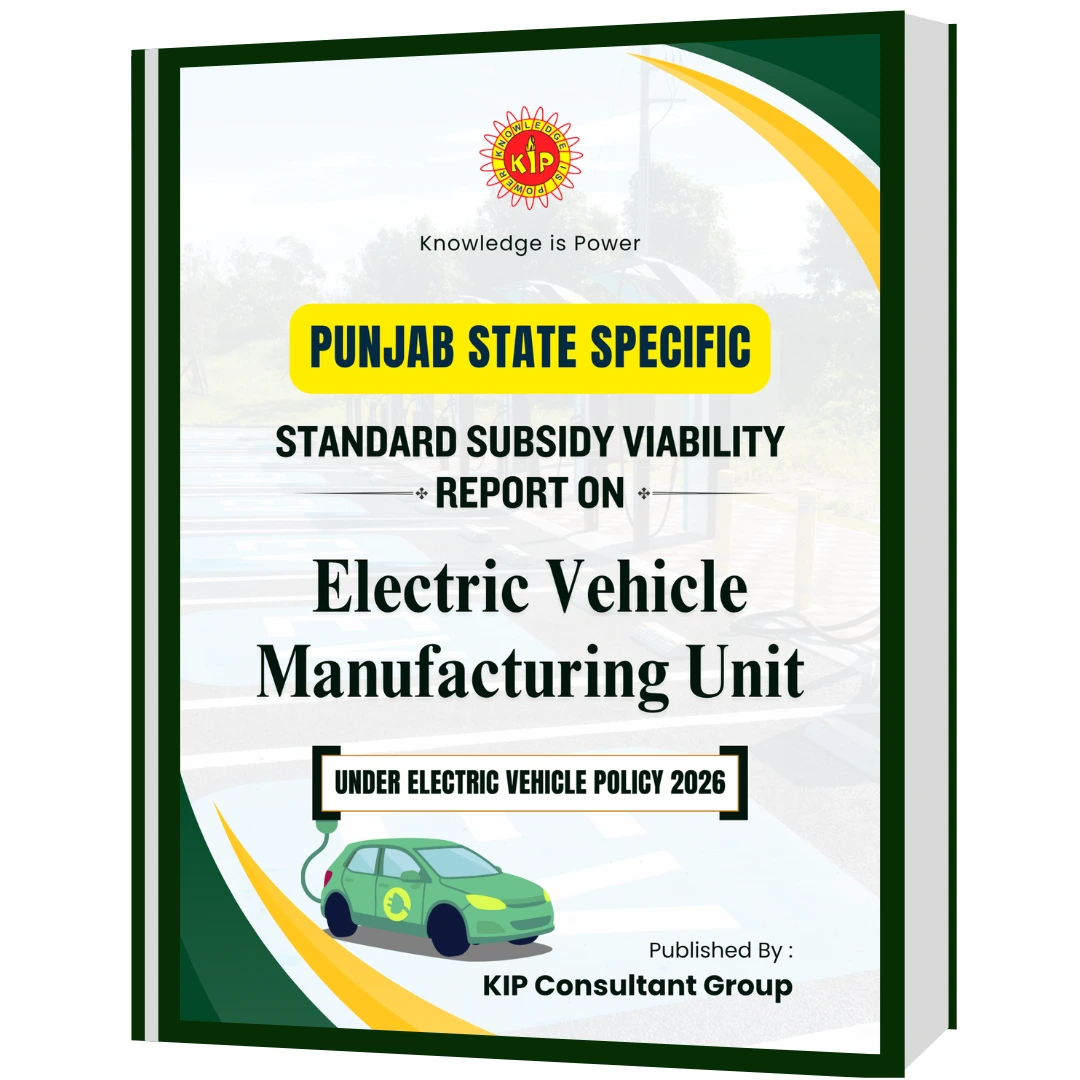
SVR for EV manufacturing (Punjab)
0Original price was: ₹2,999.00.₹2,100.00Current price is: ₹2,100.00.Punjab Electric Vehicle Manufacturing Subsidy Viability Report 2026 About This eBook The Punjab Electric Vehicle Manufacturing Subsidy Viability Report 2026 is a comprehensive guide for entrepreneurs, startups, manufacturers, and investors planning to establish or expand an EV manufacturing business in Punjab. It explains how Central and Punjab Government incentives can significantly reduce project costs and improve long-term profitability. From capital subsidies and SGST reimbursements to tax benefits and operational incentives, this report helps you make informed business decisions while navigating the evolving EV ecosystem. Key Highlights Detailed analysis of subsidies available for EV manufacturing projects in Punjab. Insights into capital incentives, SGST reimbursements, stamp duty exemptions, and electricity duty benefits. Guidance on maximizing eligible incentives based on Fixed Capital Investment (FCI). Information on MSME support schemes, credit guarantee assistance, and employment incentives. Coverage of corporate tax concessions, GST benefits, and startup-related advantages. Strategic planning tips for selecting the right incentive period and project structure. Who Should Read This eBook? EV entrepreneurs and startups launching new manufacturing ventures. Existing automotive and component manufacturers diversifying into electric mobility. MSMEs seeking government incentives and financial support. Industrial investors evaluating EV opportunities in Punjab. Business consultants and project planners working on subsidy optimization. Topics Covered Punjab EV Manufacturing Policy 2026 overview. Subsidy Viability Report (SVR) framework and financial planning. Capital subsidies, SGST reimbursement, and marketing incentives. Tax benefits and depreciation provisions for EV manufacturers. Employment generation subsidies and skill development support. ZED Certification incentives and sustainability initiatives. Compliance requirements and best practices for claiming government benefits. Why Download This eBook? This report transforms complex government policies into practical business insights. It helps you reduce investment costs, optimize subsidy claims, accelerate break-even, improve cash flow planning, and ensure compliance with eligibility conditions. Whether you’re setting up a Greenfield project or expanding an existing facility, this eBook provides the knowledge needed to build a financially stronger EV manufacturing business in Punjab. -
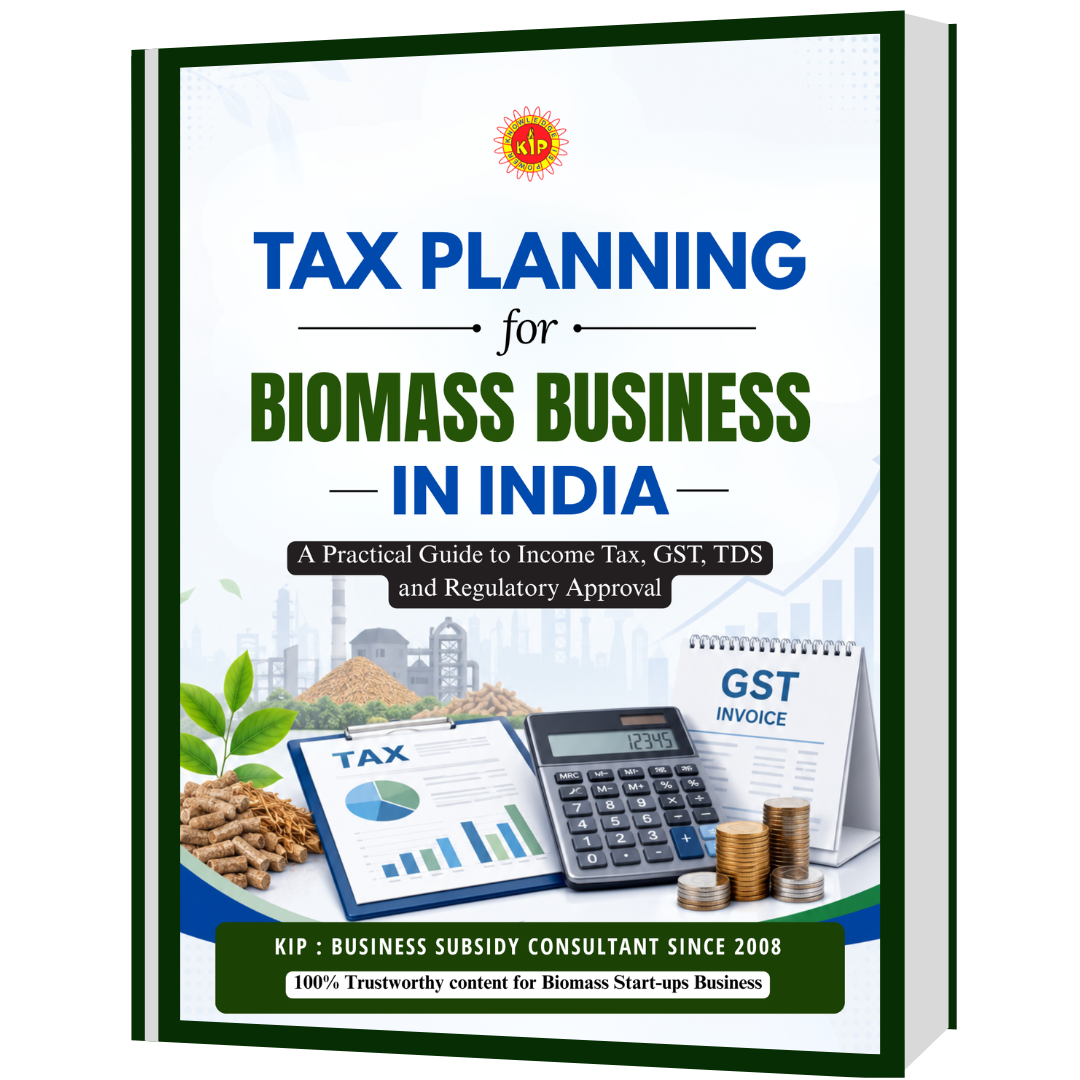
Tax Planning For Biomass Business (Physical)
0Original price was: ₹550.00.₹499.00Current price is: ₹499.00.10 in stock
Tax Planning for Biomass Business in India A Practical Guide to Income Tax, GST, TDS, and Regulatory Approval published by KIP Business Subsidy Consultant (Since 2008). Designed for biomass entrepreneurs, supply chain operators, investors, and business owners, this guide helps you optimize tax savings, ensure statutory compliance, and claim sector-specific government incentives. Table of Contents: 01. Biomass Sector Overview – Industry landscape, market potential, and government vision. 02. Choosing the Right Legal Structure for a Biomass Business – Selecting between Proprietorship, Partnership, LLP, and Private Limited options. 03. Registrations and Statutory Compliances for Biomass Businesses – Mandatory licenses, pollution permits, and regulatory approvals. 04. Tax Planning under the Income Tax Act – Revenue structuring strategies to reduce tax liability legally. 05. Deductions & Tax Incentives for Biomass Businesses – Central and state tax deductions, capital subsidies, and financial incentives. 06. Minimum Alternate Tax (MAT) & Alternate Minimum Tax (AMT) – Calculations, applicability, and tax credit utilization. 07. TDS Compliance for Biomass Supply Chains – Rules for raw material procurement, transport, and vendor payments. 08. GST Framework for Biomass Businesses – GST rates on pellets, briquettes, machinery, and Input Tax Credit (ITC) optimization. 09. KIP Services for Biomass Projects – Project financing, subsidy claims, and statutory filing assistance. Key Highlights: Tax Optimization: Learn how to leverage statutory deductions and incentives specific to green energy ventures. 100% Compliance Roadmap: Clear breakdown of GST, TDS, MAT/AMT, and regulatory registrations to keep your business risk-free. Expert Insights: Practical knowledge backed by 15+ years of expertise from KIP Business Subsidy Consultants. Who Should Buy This Book? Biomass project developers and entrepreneurs starting briquette, pellet, or power projects. Supply chain and logistics operators managing biomass raw material aggregation and supply. Investors and business owners seeking to minimize tax exposure and leverage government subsidies. Tax consultants and financial advisors looking for sector-specific guidance for biomass clients. -
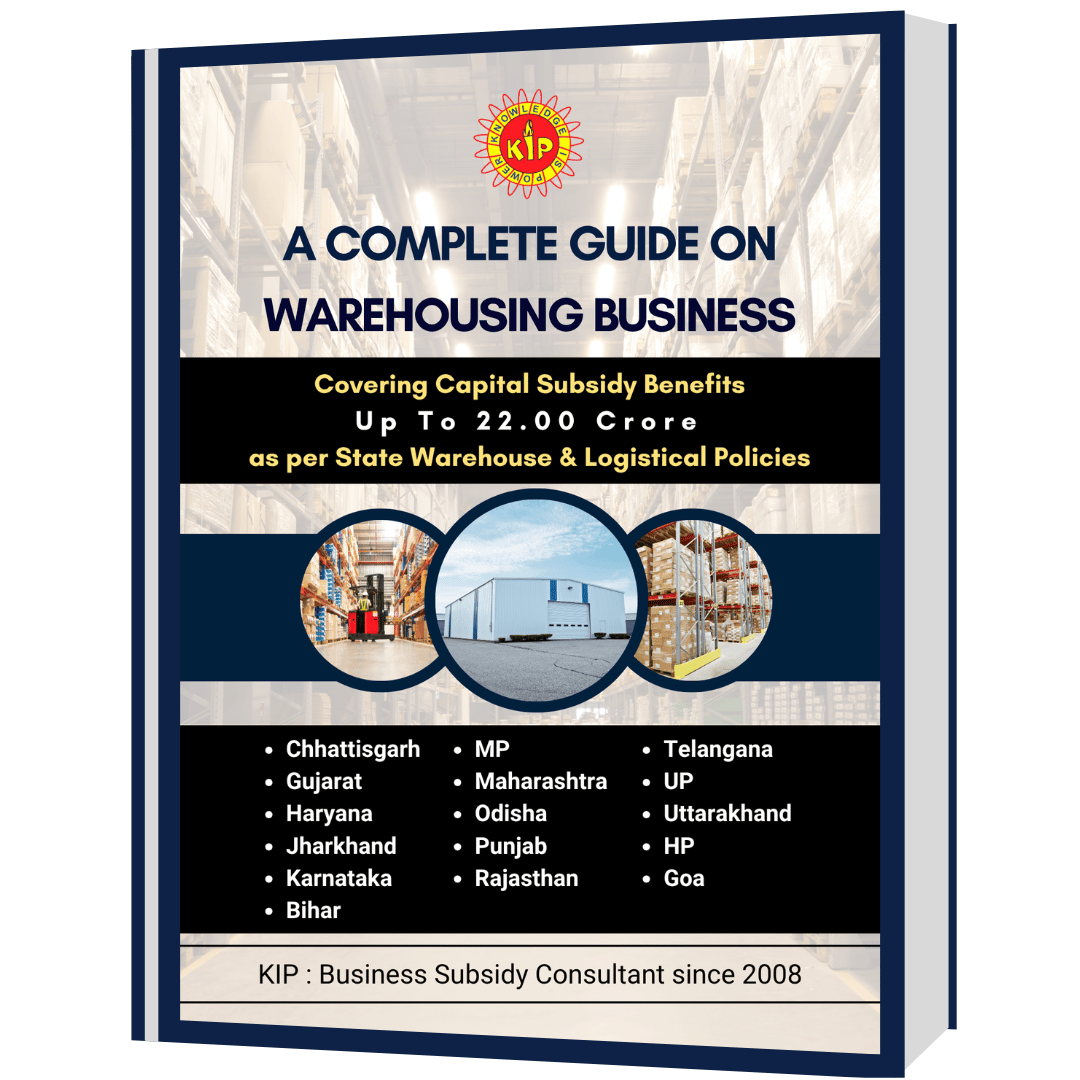
Warehouse Business Book (Physical)
0Sold : 1 / 10 10%Original price was: ₹1,999.00.₹1,499.00Current price is: ₹1,499.00.9 in stock
A Complete Guide on Warehousing Business Covering Capital Subsidy Benefits Up To ₹22.00 Crore as per State Warehouse & Logistical Policies, published by KIP Business Subsidy Consultant (Since 2008). Designed for landowners, investors, entrepreneurs, and logistics operators, this guide helps you setup a profitable warehousing business, evaluate financial feasibility, and maximize government subsidies. Table of Contents: 01. About Warehouse Business – Introduction to warehousing, modern models, and setup fundamentals. 02. Opportunities And Demand In Warehouse Business – E-commerce demand, market analysis, and site selection. 03. Central Government Subsidy Benefits – Central schemes, capital incentives, and financial support. 04. State Government Subsidy Benefits – Detailed policies across 16 states (Chhattisgarh, Gujarat, Haryana, Jharkhand, Karnataka, Bihar, MP, Maharashtra, Odisha, Punjab, Rajasthan, Telangana, UP, Uttarakhand, HP, Goa) offering up to ₹22.00 Crore. 05. Financial Feasibility Of Warehouse Business – CapEx, OpEx, rental yield models, payback period, and ROI analysis. 06. Taxation And GST Aspects Of Warehouse Business – GST rates, Input Tax Credit (ITC), and income tax compliances. 07. Risk Assessment & Subsidy Maximization – Risk mitigation strategies and approaches to maximize subsidies. 08. Conclusion – Strategic takeaways for project execution. 09. KIP Services for Warehouse Sector – DPR preparation, land feasibility, and subsidy claim assistance. Key Highlights: Up to ₹22.00 Crore Capital Subsidy: Complete state policy breakdown across 16 major Indian states. Financial Feasibility Modeling: Clear financial tools to evaluate land yields, rental returns, and payback periods. 15+ Years Expert Knowledge: Actionable insights directly from experienced consultants at KIP Business Subsidy Consultant. Who Should Buy This Book? Landowners and real estate investors aiming to build fixed long-term rental income. Entrepreneurs and logistics operators setting up commercial storage or expanding state-wide networks. Agri-business owners looking to leverage cold storage, silos, and central/state subsidy schemes. Project consultants and bankers structuring feasibility reports and subsidy applications. -
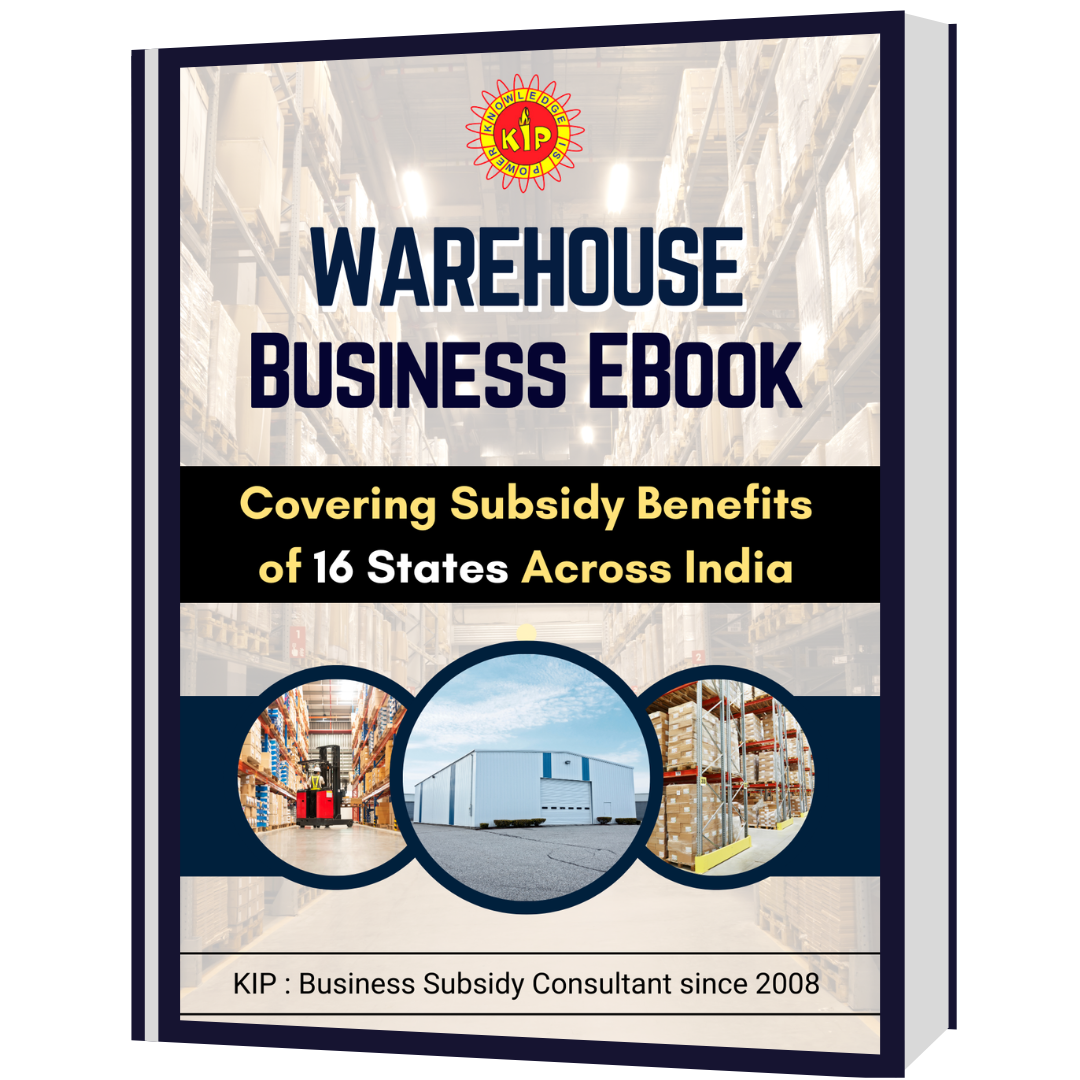
Warehouse Combo Offer (Physical)
0Sold : 5 / 12 41.67%Original price was: ₹3,000.00.₹1,000.00Current price is: ₹1,000.00.7 in stock
₹1000 + Shipping charges (₹200) -
Invest in Warehouse Business – Silent Partner in Your Financial Freedom is a practical, step-by-step eBook designed to help you build a profitable warehouse venture in India. This guide explains how to generate stable rental income through agricultural and commercial warehousing while leveraging government support and financial planning strategies. Why Warehousing is a High-Growth Opportunity India is facing a major storage shortage: 50–70 Million Tonnes gap in agricultural storage 50–70 Million Sq. Ft. gap in commercial warehousing With rapid expansion in logistics, supply chains, food processing, and online commerce, warehouse demand continues to rise. Key Advantages: ✔ Passive rental income ✔ Long-term asset appreciation ✔ Government-recognized infrastructure sector ✔ Low operational involvement ✔ Strong demand from corporates & government agencies What You Will Learn This eBook provides complete clarity from planning to profit: Market Understanding Agricultural vs Commercial Warehouse comparison Location selection strategy Regulatory approvals & compliance Subsidy & Government Support Benefits under Agriculture Infrastructure Fund Support from NABARD State-level subsidy programs (10+ states covered) Financial Planning 20,000 MT warehouse project example 6.4-year payback model DSCR 1.39 analysis Loan structuring & repayment planning Tax & Financial Benefits GST exemptions in agricultural warehousing 100% capital expenditure deduction under Section 35AD Long-term tax-saving strategies Asset-backed secure investment structure Who Should Invest This eBook is ideal for: Entrepreneurs entering logistics/infrastructure Investors seeking stable long-term returns Farmers & FPOs planning storage facilities Landowners developing warehouse projects Business owners expanding supply chain operations








 Home
Home  Whishlist
  Checkout
  Account
 - Image
- SKU
- Rating
- Price
- Stock
- Availability
- Add to cart
- Description
- Content
- Weight
- Dimensions
- Additional information
01
DAYS
02
HRS
30
MIN
40
SEC
Start Your Agri-Based Business
Download your FREE Agri Business Gift
and learn how to start & grow a profitable farming business
Start Your Manufacturing Business
Download Your FREE Business Planning Guide
and Learn Subsidy Planning, Bank Finance & Industrial Business Growth.
Start Your MSME Business
Download your FREE MSME Business Gift
and learn how to start & grow a profitable business
Start Your Agri-Based Business
Download your FREE Business Gift
and learn how to start & grow a profitable Business
Start Your Warehouse Business
Download your FREE 16 State Subsidy Warehouse ebook
and learn how to start & grow a profitable business
Start Your Biomass Business
Download your FREE Biomass ebook
and learn how to start & grow a profitable business
Start Your Business
Download your FREE Biomass SVR Hindi Version and learn how to start & grow a profitable business
Start Your Compressed Bio Gas Business
Download your FREE CBG and learn how to start & grow a profitable business
Start Your Manufacturing Business
Download Your FREE Business Planning Guide
and Learn Subsidy Planning, Bank Finance & Industrial Business Growth.