

Fueling Business Growth, Unlocking Subsidy Benefits.
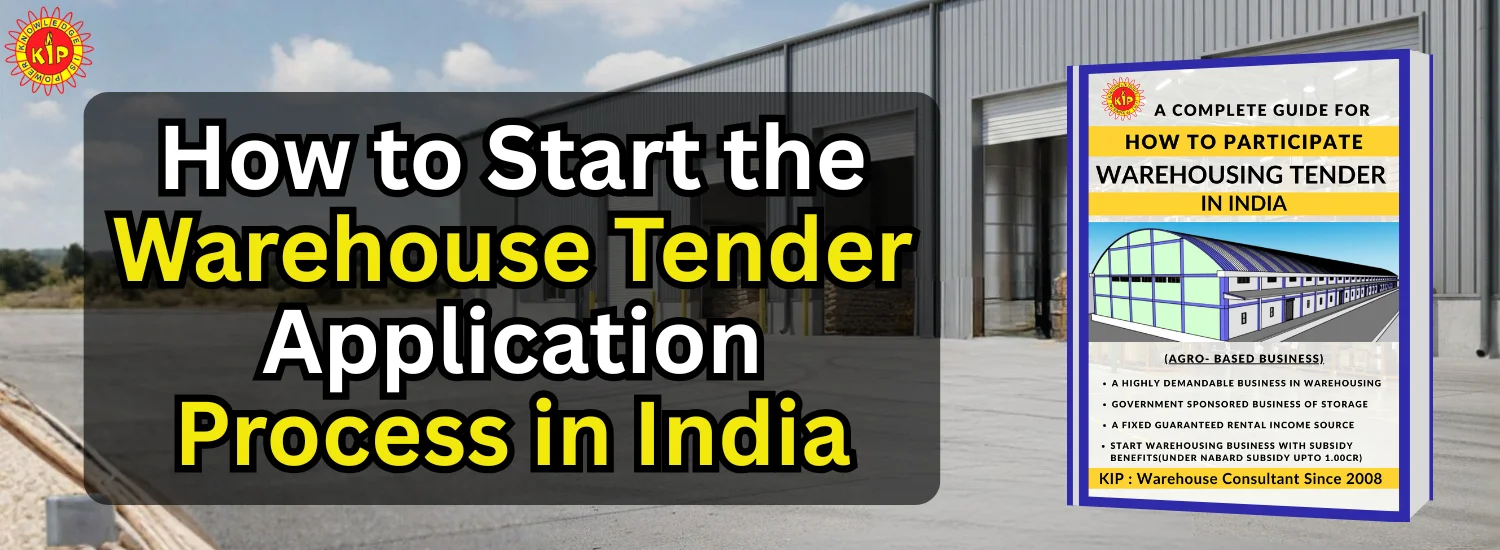
How to Start the Warehouse Tender Application Process in India

India’s warehousing sector—especially for food grain storage—is rapidly becoming one of the most profitable and secure investment opportunities. With agricultural production rising every year and agencies like FCI, CWC, and state procurement bodies expanding their storage needs, the demand for scientific, well-structured warehouses has never been stronger.

For investors looking for fixed guaranteed rental income, long-term asset creation, and low-risk government-backed business models, warehouse tenders are a powerful entry point.
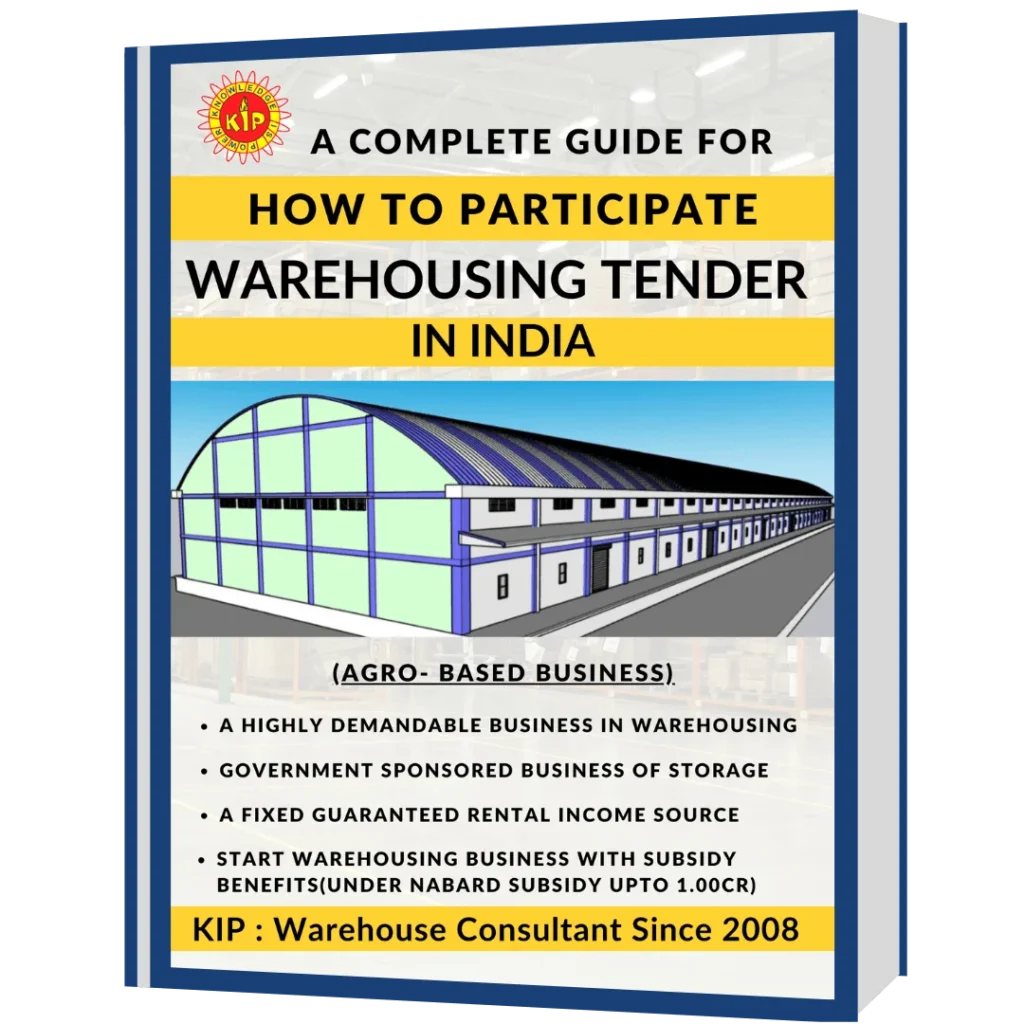
This eBook gives you a complete beginner-friendly roadmap—covering demand, tender types, eligibility, financial returns, and subsidies.
Understanding the Demand & Opportunity

India has a huge storage gap, which directly creates opportunities for private warehouse developers.

India’s Storage Shortfall

  • Food grain production (2021): ~311 MMT

  • Available storage capacity: ~145 MMT

  • Storage shortage: 166 MMT (53% gap)

Because of this massive deficit, government agencies are inviting private entrepreneurs to build and operate warehouses.

Key Demand Drivers

  • Rising food production

  • Increasing MSP procurement

  • Need for buffer stock

Click for More...

Types of Warehousing Tenders in India

  • PEG Scheme – Build godowns on private land with guaranteed rent

  • PWS Scheme – Lease an existing warehouse

  • AMP Model – Build on FCI land; ownership transfers later

  • Silo Projects – Advanced 30-year high-tech storage

Click for More...

Eligibility & Pre-Planning Requirements

Land Identification

You can participate with:

  • Owned land

  • Leased land

  • Intended purchase/lease

Land Suitability Criteria

Key norms include:

  • 8–15 km proximity to mandi/railway

  • 22-feet minimum road width

  • No hazardous units nearby

  • No overhead 11 KV lines

Click for More...

Tender Bidding & Allotment Process

Technical Bid

Basic documents:

  • Land papers

  • ITR

  • Net worth proof

  • NOC

  • Firm documents

Financial Bid

  • Quote rent per MT per month

  • L1 bidder usually wins

Post-Allotment

  • 6–12 months construction window

Click for More...

Financial Returns & Subsidies

Typical Financials

ParameterCovered GodownSilo Project
Rental Income₹80–₹100/MT/month₹120–₹150/MT/month
Payback6–8 yrs9–11 yrs

Subsidy Benefits

  • NABARD Capital Subsidy (up to ₹100 lakh)

  • AIF Interest Subsidy

  • State Incentives (capital subsidy, stamp duty refund, SGST refund, etc.)

Click for More...

How KIP Can Help You

Frequently Asked Questions (FAQs)

Q1: Who can apply for warehouse tenders?

Anyone—individuals, companies, partnerships, and infrastructure developers—can apply if they meet land and document requirements.

Q2: Do I need to own land before applying?

No. You can apply using owned land, leased land, or land intended for lease/purchase, depending on the tender terms.

Q3: How much investment is required?

Investment varies by capacity and tender type:

  • Covered Godown: Approx. ₹5,000–₹6,000 per MT

  • Silo Projects: Approx. ₹10,000–₹13,000 per MT

Q4: Which agencies release these tenders?

FCI, CWC, State Warehousing Corporations, and procurement bodies like HAFED, PUNGRAIN, MARKFED, and UPSWC.

Q5: What documents are required for participation?

Common documents include land papers, ITRs, net worth certificates, company details, and land NOC (if applicable).

Q6: Are there subsidies for warehouse construction?

Yes. Eligible investors can access NABARD Capital Subsidy, AIF Interest Subsidy, and various state-level incentives.

Select the fields to be shown. Others will be hidden. Drag and drop to rearrange the order.
  • Image
  • SKU
  • Rating
  • Price
  • Stock
  • Availability
  • Add to cart
  • Description
  • Content
  • Weight
  • Dimensions
  • Additional information
Click outside to hide the comparison bar
Compare

Suggestion Box

We value your ideas and feedback!