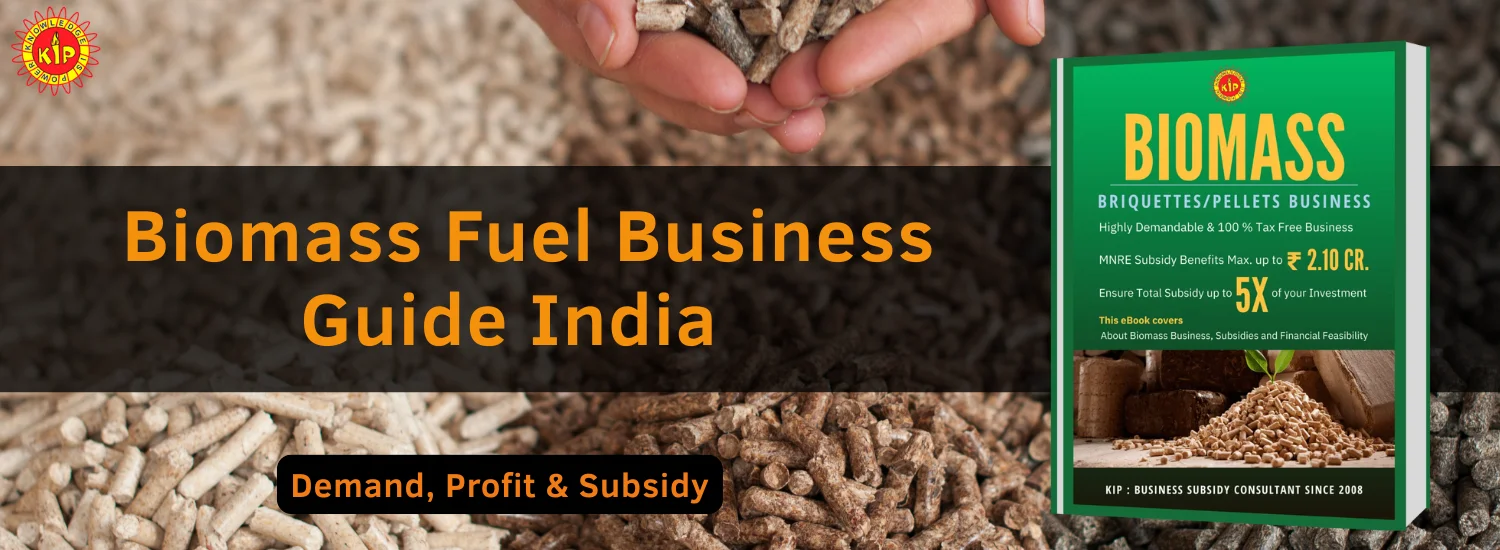


Fueling Business Growth, Unlocking Subsidy Benefits.
Biomass Briquettes & Pellets: A Fast-Growing Green Business in India

Biomass Briquettes & Pellets: A Fast-Growing Green Business in India

India is witnessing a major shift toward sustainable energy solutions, and biomass briquettes and pellets are emerging as powerful contributors to this transition. As a crucial Waste-to-Energy initiative, biomass fuel not only promotes clean energy but also addresses one of India’s biggest challenges—managing huge volumes of agricultural residue. Every harvesting season, millions of tons of crop waste are generated across the country. Instead of being burnt in fields, this residue can be converted into valuable energy fuel, supporting both environment protection and rural economies.

What Is Biomass Fuel?

Biomass briquettes and pellets are solid, compact fuel blocks produced from organic waste, mostly agricultural residues. These include paddy straw, mustard husk, cotton stalk, maize cobs, forest clippings, and horticulture waste. By converting these low-value waste materials into high-density fuel, biomass processing unlocks a renewable energy source that can be produced locally and supplied continuously. Unlike coal, biomass emits significantly lower pollutants and aligns with India’s climate commitments, making it highly suitable for industries looking to reduce carbon emissions.

Biomass vs. Coal: A Quick Comparison

FactorCoalBiomass Briquettes/Pellets
PollutionHighLow
Ash Content15%–30%6%–10%
CostExpensiveLess Expensive
Wastage15%–20%8%–10%

Biomass fuels offer an eco-friendly, low-ash, and cost-effective alternative to coal. The easier handling and storage, along with reduced wastage, make biomass a preferred energy source for industries that are exploring cleaner and more economical fuel options.

Massive Demand & Mandatory Consumption

Huge Market Demand Gap

India needs nearly 95,000 tons of biomass fuel every day, but current production capacity is only 8,000–10,000 tons per day.
This massive gap creates a strong opportunity for new biomass manufacturing units.

Government Policy Boost

On 11 July 2023, the Ministry of Environment, Forest and Climate Change mandated that all coal-based thermal power plants must use at least 5% biomass (pellets or briquettes) blended with coal.

  • Over 208+ thermal power plants are operating nationwide.

  • 60+ plants have already begun co-firing biomass.

  • Major companies like NTPC, Adani Power, Vedanta are actively issuing tenders for biomass pellets.

Industries Using Biomass Fuel

Besides power plants, the following industries are switching to biomass due to cost and environmental advantages:

  • Textile Mills

  • Paper Mills

  • Food & Food Processing Units

  • Chemical Plants

  • Dyeing & Leather Industries

The Financial Edge: Subsidies, Tax Benefits & Funding

Starting a biomass briquette or pellet plant becomes much easier because the government offers strong financial support. These benefits reduce setup cost and increase overall profit.


1. 100% Income Tax Exemption (Section 80JJA)

  • 100% tax deduction on profits for 5 years

  • Available for all waste-to-energy units

2. MNRE Capital Subsidy (Updated July 2024)

MNRE provides capital subsidy based on plant capacity, which directly reduces your project investment.

Subsidy Rates:

Plant TypeSubsidy per MTPHMax Subsidy (5 MTPH)
Briquette Plant₹9.0 lakh₹45 lakh
Non-Torrefied Pellet Plant₹21.0 lakh₹1.05 crore
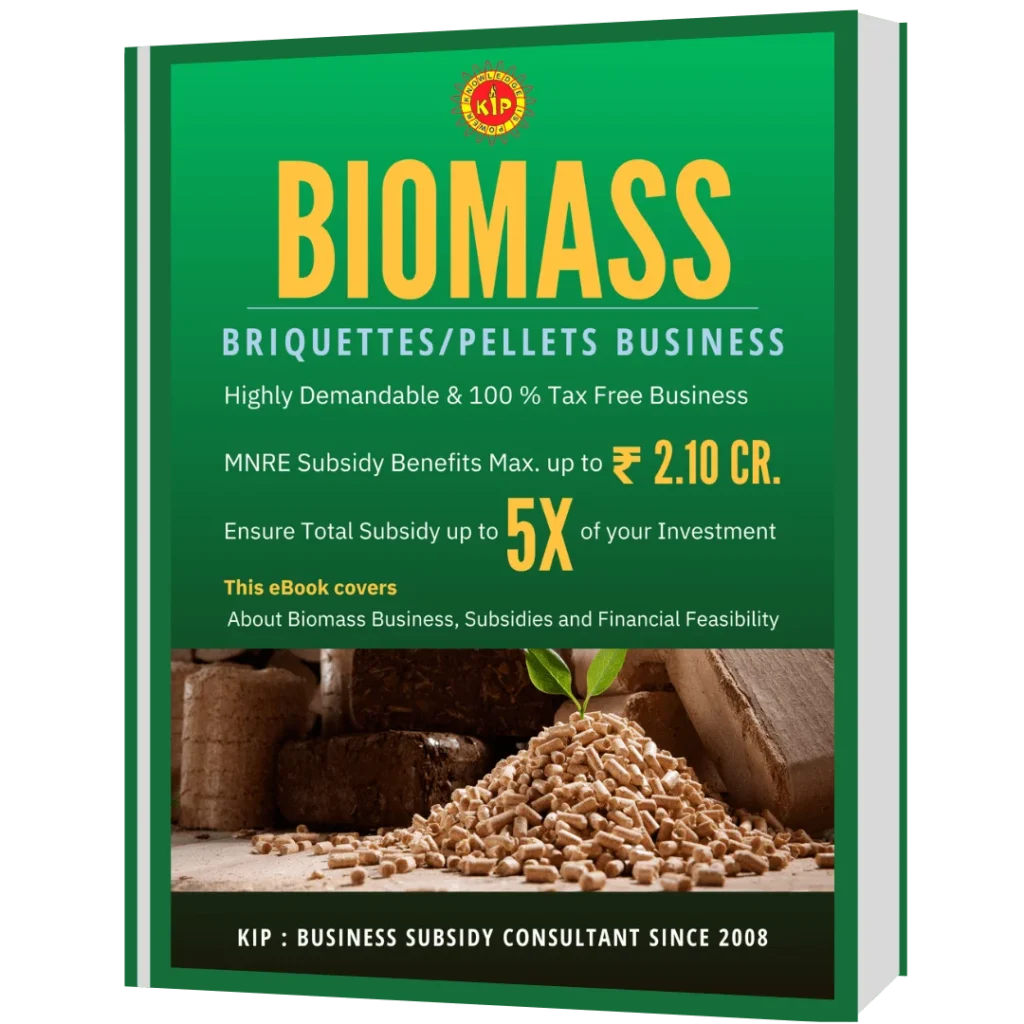
Torrefied Pellet Plant₹42.0 lakh₹2.10 crore

Why torrefied pellets get more subsidy?
They have higher energy value, very low moisture, and better storage/transport performance.

3. Funding Support: AIF + CGTMSE

The Agri Infrastructure Fund (AIF) further supports entrepreneurs with:

  • 3% interest subvention for loans up to ₹2 crore

  • Collateral-free loans through CGTMSE coverage

How KIP Can Help You

KIP  makes the entire process of setting up a biomass briquette or pellet plant easier, faster, and more profitable. Our team guides you at every step—from understanding government policies to securing subsidies and preparing all required documents. We ensure you get maximum financial benefits with minimum effort.

  • Project Feasibility & SVR Reports:
    We prepare detailed subsidy viability reports to show your project’s eligibility, benefits, and financial returns.

  • Subsidy Consultation:
    Our experts identify all central and state-level subsidies such as MNRE CFA, tax exemptions, and other incentives.

  • Documentation & Application Support:
    We handle complete paperwork, compliance, and online submissions so you avoid delays or rejections.

  • End-to-End Guidance:
    From planning the plant capacity to understanding raw material sourcing and buyer demand, we guide you throughout the project.

  • Fast & Hassle-Free Process:
    With our experience in renewable energy projects, we ensure smooth execution and quick subsidy disbursement.

Frequently Asked Questions (FAQs)

Q1: Is biomass briquette/pellet business profitable?

Yes, due to high demand and government support.

Q2: What is the basic investment required?
Around ₹25–40 lakh for small units.
Q3: What raw materials are used?

Agri waste like husk, straw, sawdust, and bagasse.

Q4: Who buys biomass fuel?

Thermal power plants and steam-based industries.

Q5: What subsidies are available?

100% tax exemption + MNRE capital subsidy.

Q6: Do I need special approvals?

Only basic industrial permissions and pollution NOC.

Select the fields to be shown. Others will be hidden. Drag and drop to rearrange the order.
  • Image
  • SKU
  • Rating
  • Price
  • Stock
  • Availability
  • Add to cart
  • Description
  • Content
  • Weight
  • Dimensions
  • Additional information
Click outside to hide the comparison bar
Compare

Suggestion Box

We value your ideas and feedback!