
Fueling Business Growth, Unlocking Subsidy Benefits.
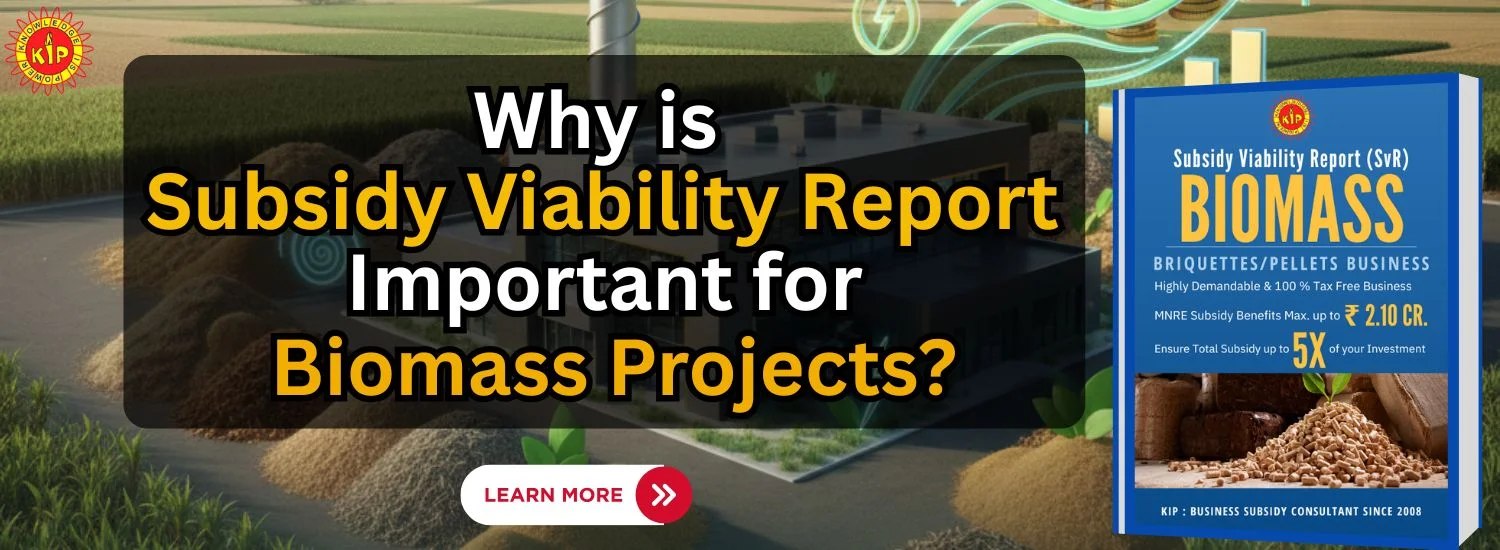
Why is Subsidy Viability Report Important for Biomass Projects

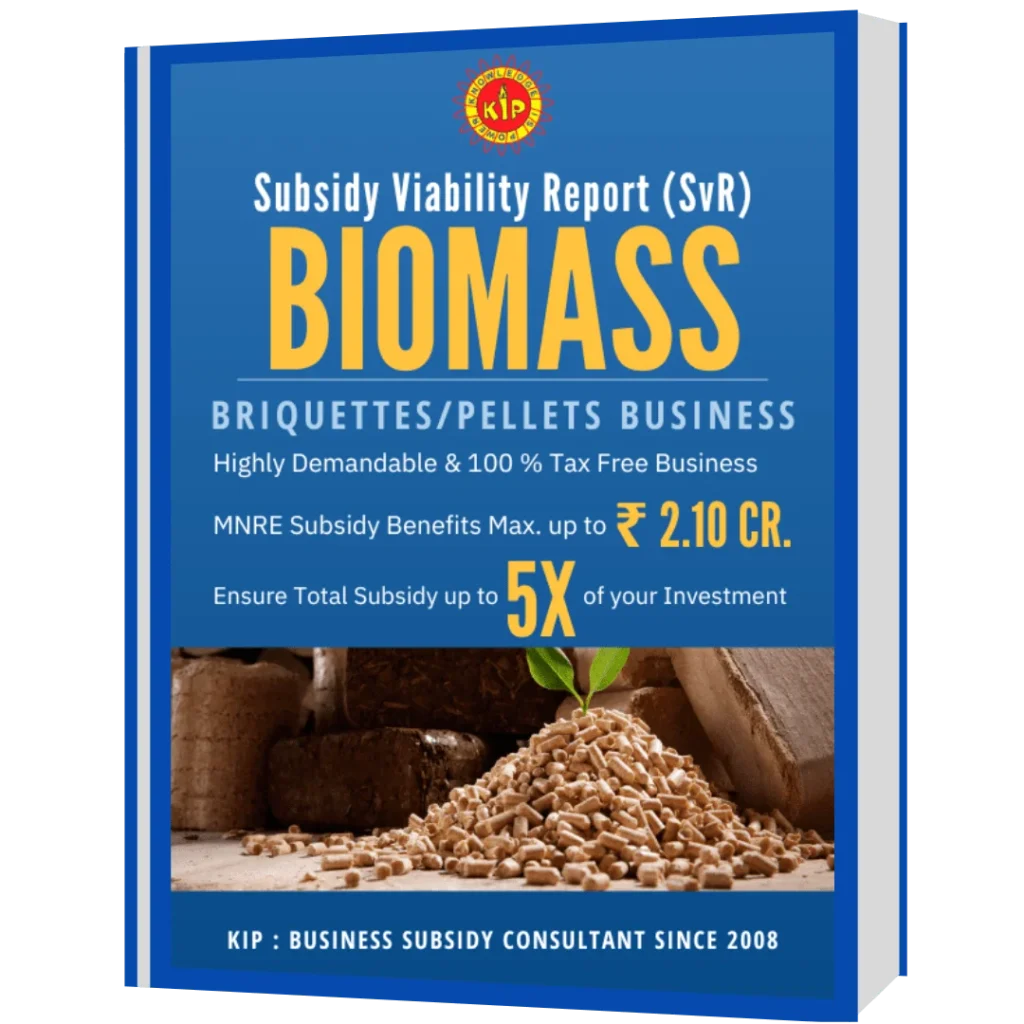
The Biomass Briquettes and Pellets industry has emerged as one of India’s most promising green-energy sectors—recognized as a thrust area, supported by strong government incentives, and backed by rapidly increasing demand from thermal power plants and industrial users. However, entering this sector without structured planning can lead to missed subsidies, incorrect financial assumptions, and compliance gaps.

This is where a Subsidy Viability Report (SvR) becomes indispensable.

A well-prepared SvR acts as a strategic blueprint that helps entrepreneurs, investors, and existing manufacturers understand the true financial potential of their biomass project, ensuring that every possible subsidy and incentive is aligned with the project’s design from day one.
Provides a Clear and Confident Investment Roadmap

The SvR helps investors make informed decisions by offering a realistic financial analysis based on actual subsidy eligibility, project capacity, and state-specific benefits.

Key advantages:

  • Shows subsidy-linked cost savings

  • Defines practical project budgets

  • Highlights achievable profit margins

  • Helps choose the right capacity (1–5 TPH)

  • Aligns the project model with maximum subsidy gain

Maps All Applicable Subsidies With Precision

Biomass projects can access multiple Central and State incentives. The SvR simplifies this by listing all eligible benefits in one structured plan.

Central Incentives:

  • MNRE CFA:

    • Briquettes: up to ₹45 lakh

    • Non-Torrefied Pellets: up to ₹1.05 crore

    • Torrefied Pellets: up to ₹2.10 crore

  • Income Tax (80JJA): 100% tax-free profit for 5 years

  • Agri Infra Fund: 3% interest subvention + CGTMSE fee refund

  • PMEGP: Up to 35% subsidy for projects up to ₹50 lakh

State Incentives:

15–40% Capital Subsidy

60–100% Stamp Duty Refund

EDC/CLU Fee Exemptions

Electricity Duty Waiver

50–100% SGST Refund

Employment Subsidy

Eligibility and Compliance

A major reason investors lose subsidies is non-compliance. The SvR outlines all mandatory criteria clearly.

Key compliance areas:

  • Use of only agri-residue–based raw materials

  • Mandatory IPA approval before starting production

  • 12-month commissioning timeline after IPA

  • Only one central capital subsidy allowed

How KIP Can Help You

KIP helps you plan, set up, and run your Biomass Briquettes or Pellets project with maximum subsidy benefits and minimum risk.

What KIP Services:

Frequently Asked Questions (FAQs)

Q1: What is an SvR?

A report that shows all eligible subsidies and the financial viability of your biomass project.

Q2: Why is SvR needed?

To plan the project correctly and maximize subsidies.

Q3: What subsidies does it include?

MNRE CFA, AIF, PMEGP, 80JJA, and State-level incentives.

Q4: Does it help with bank loans?

Yes, it supports fast loan approval with clear financials.

Q5: Can KIP help with subsidy filing?

es, KIP handles complete subsidy processing and compliance.

Q6: How long does it take to prepare an SvR?

Typically 5–7 days, depending on project size, location, and required customization.

Select the fields to be shown. Others will be hidden. Drag and drop to rearrange the order.
  • Image
  • SKU
  • Rating
  • Price
  • Stock
  • Availability
  • Add to cart
  • Description
  • Content
  • Weight
  • Dimensions
  • Additional information
Click outside to hide the comparison bar
Compare

Suggestion Box

We value your ideas and feedback!