

Fueling Business Growth, Unlocking Subsidy Benefits.
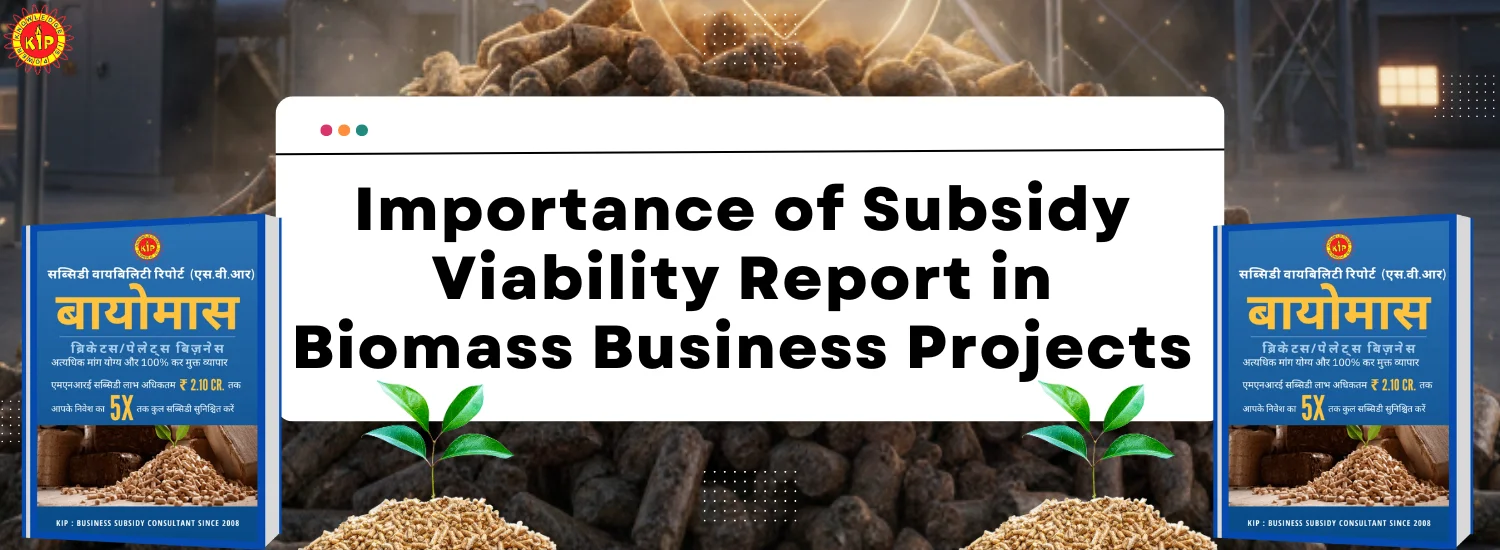
Importance of Subsidy Viability Report in Biomass Business Projects

Importance of Subsidy Viability Report in Biomass Business Projects

The biomass briquettes and pellets business is rapidly emerging as a profitable and sustainable green energy venture in India. It is a sector supported by both the Central and State Governments, offering tax exemptions, subsidies, and incentives for entrepreneurs and investors.

If you are looking to start or expand a biomass business, understanding the financial and policy landscape is crucial. That’s where the Subsidy Viability Report (SVR) comes in. Our eBook, Subsidy Viability Report (SVR) in Biomass Business – Hindi Version, is designed to guide you through the process of maximizing profits, minimizing costs, and taking full advantage of government incentives.

What is the Subsidy Viability Report (SVR)?

The SVR is a comprehensive guide that helps entrepreneurs and investors:

  • Identify eligible government subsidies and incentives

  • Understand tax benefits and exemptions

  • Plan financial and operational strategies for biomass projects

  • Increase the chances of bank financing and loan approval

Why Biomass Are a Smart Investment

Biomass briquettes and pellets are an excellent “waste-to-energy” solution, converting agricultural residues and biodegradable waste into clean fuel. They are increasingly being used as a coal alternative in industries and power plants due to their environmental and economic advantages.

Benefits of Biomass Fuel Compared to Coal

FactorCoalBiomass Briquettes/Pellets
Calorific Value5000–6000 KCAL/kg3400–4000 KCAL/kg
Ash Content15%–30%6%–10%
CostHighLower
PollutionHighLow
Wastage15%–20%8%–10%
HandlingDifficultEasy

Market Opportunity in India

The demand for biomass briquettes and pellets is growing rapidly:

  • Daily demand: ~95,000 tons (Approx)

  • Current production: 8,000–10,000 tons (Approx)

Government policies also support the use of biomass: all coal-based thermal power plants must use at least 5% biomass pellets or briquettes. With 208+ thermal plants in India, the market opportunity is massive.

Key industrial consumers include:

  • Thermal power plants

  • Textile mills and dyeing houses

  • Brick kilns

  • Paper and pulp mills

  • Food processing units

  • Chemical and pharmaceutical industries

Govt Subsidies and Incentives Covered in the SVR

Central Government Support

  1. Income Tax Exemption – Section 80JJA

    • 100% tax deduction for the first five years of operation

    • Available for profits from producing biomass briquettes or pellets

  2. MNRE Central Financial Assistance (CFA)

    • Biomass Briquettes: ₹9 lakh per MTPH (max ₹45 lakh)

    • Non-Torrefied Pellets: ₹21 lakh per MTPH (max ₹1.05 crore)

    • Torrefied Pellets: ₹42 lakh per MTPH (max ₹2.10 crore)

  3. Agri Infrastructure Fund (AIF)

    • 3% interest subsidy on loans up to ₹2 crore (up to 7 years)

    • Credit guarantee coverage under CGTMSE

  4. PMEGP Scheme for Small Projects

    • Capital subsidy up to 35% (max ₹17.5 lakh) for units up to 2 TPH

State-Level Incentives

  • Capital subsidies: 15%–40%

  • Stamp duty and GST refunds: 50%–100%

  • Electric duty exemption: 100%

  • Employment generation subsidies

Why You Need This eBook

Our Hindi eBook on SVR in Biomass Business is specifically created for entrepreneurs, investors, and small businesses to:

  • Understand government subsidies in detail

  • Identify the best funding and tax options

  • Plan the most profitable business strategy

  • Avoid common mistakes and compliance issues

How KIP Can Help You​

KIP helps you maximize profits and subsidies in the biomass business. 

Frequently Asked Questions (FAQs)

Q1: What is Subsidy Viability Report (SVR) ?

A guide to government subsidies, tax benefits, and funding for biomass projects.

Q2: Why is SVR important?

It helps maximize profits, reduce costs, and plan your project.

Q3: Which projects qualify?

Biomass briquettes, pellets, and renewable fuel units using agricultural or forest residues.

Q4: How does SVR help with financing?

Prepares bank-ready reports and identifies eligible subsidies for loans.

Q5: How KIP Can Help You?

Yes – SVR, DPR, subsidy filing, compliance, and investment planning.

Select the fields to be shown. Others will be hidden. Drag and drop to rearrange the order.
  • Image
  • SKU
  • Rating
  • Price
  • Stock
  • Availability
  • Add to cart
  • Description
  • Content
  • Weight
  • Dimensions
  • Additional information
Click outside to hide the comparison bar
Compare

Suggestion Box

We value your ideas and feedback!