

We Believe in Knowledge.... Because Knowledge is Power (KIP).
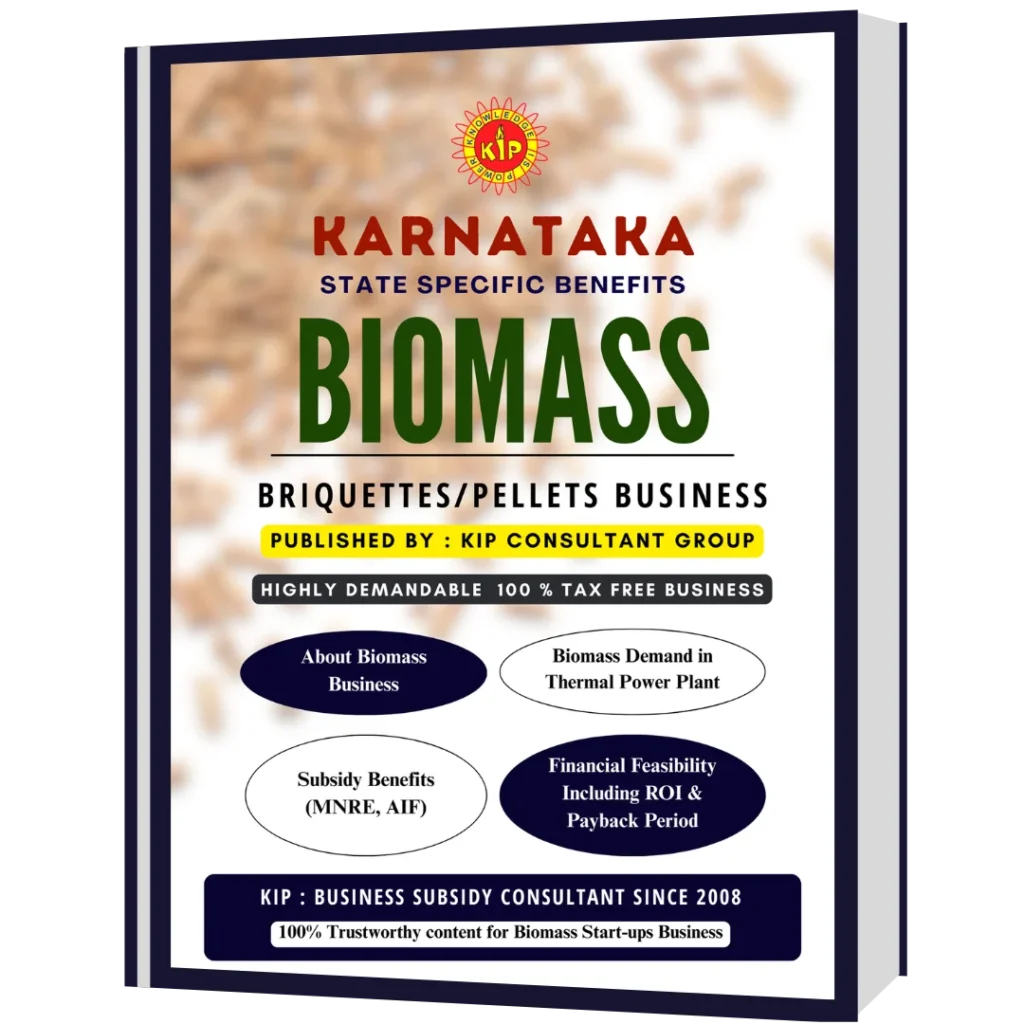
Biomass briquettes and pellets manufacturing plant in Karnataka Agricultural waste converted into biomass fuel

Right Knowledge for Profitable Biomass Business in Karnataka

The Karnataka Biomass eBook is your complete guide to turning agricultural waste into a profitable business. Learn how to convert paddy straw, mustard husk, sugarcane trash, and other residues into high-demand biomass briquettes and pellets, used widely in industrial boilers and thermal power plants.

The eBook provides clear, step-by-step guidance on government subsidies, financial planning, plant setup, and regulatory compliance. It explains how to maximize profits while minimizing risks, including raw material management and quality standards. With Karnataka’s supportive policies and mandatory biomass usage in power plants, this eBook equips entrepreneurs to start a 100% tax-free, sustainable, and lucrative business.


.  New Year Special Gift  .
👉 Claim Your Gift Now  

Why Karnataka Is a Goldmine for Biomass Entrepreneurs

Karnataka is emerging as one of India’s strongest hubs for biomass-based businesses due to its vast agricultural output and proactive renewable energy policies. The state generates massive volumes of agricultural residues such as paddy straw, mustard husk, sugarcane trash, and forest biomass. Earlier considered waste and a major cause of pollution due to open burning, these materials are now the backbone of a fast-growing biomass briquettes and pellets industry.

The Karnataka Biomass eBook explains how this waste-to-energy transformation is creating long-term business opportunities while supporting India’s clean energy goals.

Product Knowledge Every Investor Must Have

Choosing the right biomass product is critical for business success. This eBook provides a clear comparison between the two major biomass fuels:

  • Biomass Briquettes: Large, compressed blocks used mainly in industrial boilers, furnaces, and thermal applications.

  • Biomass Pellets: Small, uniform cylindrical fuels preferred by thermal power plants due to easy handling, consistent quality, and automated feeding systems.

The eBook also explains the difference between non-torrefied and torrefied pellets, including production technology, cost implications, and market demand. Torrefied pellets, produced at 300–350°C, offer higher calorific value and durability. Although capital-intensive, the higher MNRE subsidies make torrefied pellet plants highly attractive for serious investors.


Guaranteed Market Demand Backed by Govt Mandates

One of the strongest highlights covered in the Karnataka Biomass eBook is the compulsory biomass usage policy. India’s daily biomass demand is around 95,000 tons, while supply remains limited to 8,000–10,000 tons, creating a massive demand–supply gap.

As per the Ministry of Environment, Forest and Climate Change:

  • Coal-based thermal power plants must use minimum 5% biomass pellets from FY 2024–25

  • This will increase to 7% from FY 2025–26

The eBook provides insights into Karnataka-based opportunities, including supply potential to major power stations like Bellary and Raichur, along with guidance on participating in long-term tenders.

100% Tax-Free Income & High-Value Subsidies

The biomass sector is recognized as a Thrust Sector, and this eBook breaks down all available financial benefits in a simple, actionable manner:

  • 100% Income Tax Exemption under Section 80JJA for the first 5 years

  • MNRE Central Subsidy

    • Up to ₹21 lakh per TPH for non-torrefied pellet plants

    • Up to ₹42 lakh per TPH for torrefied pellet plants (up to 5 TPH)

  • Karnataka Renewable Energy Policy 2022–2027 Benefits

    • 100% stamp duty exemption (selected zones)

    • Concessional registration charges

    • Power and electricity duty subsidies

These incentives dramatically reduce project cost and improve overall ROI, all detailed step-by-step inside the eBook.

Investment, ROI & Risk Management Covered

The Karnataka Biomass eBook includes a complete financial feasibility model. A standard 2 TPH biomass pellet plant requires an investment of around ₹280 lakhs, including machinery, civil work, and working capital.

According to the projections covered in the eBook:

  • Net Profit Ratio: 12%+ after stabilization

  • Project IRR: Up to 44.34% over 7 years

  • Payback Period: Approximately 3.5 years

The eBook also highlights practical risk factors such as raw material seasonality and quality compliance (GCV & moisture limits), along with proven strategies to manage storage, procurement, and technical standards effectively.

Why Every Biomass Entrepreneur Needs This eBook

The Karnataka Biomass Briquettes & Pellets eBook is designed for entrepreneurs, investors, MSMEs, and consultants who want clear data, policy clarity, subsidy guidance, and real financial insights before starting.

This is not just information—it’s a ready business roadmap for entering Karnataka’s fast-growing biomass sector.

How KIP Can Help You​

Frequently Asked Questions (FAQs)

Q1: Why Karnataka is ideal for this business?

The state produces large volumes of agricultural residues and offers strong government incentives.

Q2: Are there government subsidies available?

Yes. MNRE and Karnataka state policies provide high subsidies and 100% tax benefits for eligible units.

Q3: How much investment is required?

A standard 2 TPH pellet plant requires around ₹280 lakhs, including machinery and working capital.

Q4: What is the payback period?

Typically around 3–3.5 years, with strong profit margins and high IRR.

Q5: Is there guaranteed demand?

Yes. Coal-based thermal power plants in Karnataka must blend biomass pellets (5–7%), ensuring stable market demand.

Select the fields to be shown. Others will be hidden. Drag and drop to rearrange the order.
  • Image
  • SKU
  • Rating
  • Price
  • Stock
  • Availability
  • Add to cart
  • Description
  • Content
  • Weight
  • Dimensions
  • Additional information
Click outside to hide the comparison bar
Compare